
Our Teachers
Our teachers belong to the line of disciplic succession coming from great masters such as Nammalvar, Nathamuni, Yamunacharya, Ramanujacharya, and Śrī T. Krishnamacharya — followers of Lord Vishnu.
Yoga is not invented — it is received.
In its truest form, yoga is not a system one invents — it is a sacred science that is received. Traditionally, yoga has always been passed down through sampradāya: a living spiritual lineage where teachings are transmitted from guru to disciple (guru-śiṣya paramparā), ensuring not only accuracy but also the inner transformation that authentic yoga demands.
The Sanskrit term sampradāya means a “fully handed down tradition.” It is not just a school of thought — it is a channel of preserved realization, grounded in śruti (revealed scripture), smṛti (remembered tradition), and the lived wisdom of realized teachers.
At Yadu Yoga, we are committed to teaching within this sacred framework, maintaining continuity with a lineage that holds yoga as a path of liberation (mokṣa), not merely fitness or personal development. We honor it as it was handed down, through discipline (tapas), study (svādhyāya), and devotion (īśvarapraṇidhāna).
Discipline
Sustained, devoted practice that purifies body and mind.
Study
Continuous study of self and of the revealed scriptures.
Devotion
Surrender of the fruits of practice to the Divine.
Śrī T. Kṛṣṇamācārya and the Living Tradition
The teachings we share are deeply inspired by the unbroken line of ācāryas of the Śrī Vaiṣṇava tradition — preserved not by reinvention, but by remembrance.
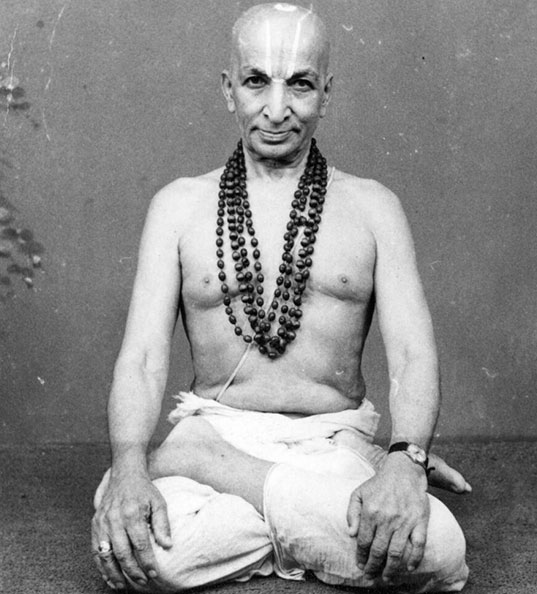
Śrī Tirumala Kṛṣṇamācārya
Revered as a great scholar in Veda-s, Śāstra-s and traditions, and an unparalleled exponent of Yoga, Śrī T. Krishnamacharya was born in Muchukundapura in the Mysore presidency in 1888 — a descendant of Yogi Nāthamuni, a 9th-century Vaiṣṇavite saint.
Over fifteen years he earned degrees in several areas of Indian philosophy (Sāṁkhya-yoga Sikhāmaṇi, Mīmāṁsā Tīrtha, Nyāyācārya, Vedāntavāgīśa, Nyāya Ratnā, Vedānta Kesari). In 1917 he became the disciple of Yogi Rama Mohana Brahmachari near Manasarovar Lake, spending seven years in Tibet learning yoga.
The King of Mysore became his disciple in 1930, and at the King’s request he established a Yoga Centre in the palace. In some 80 years of teaching he helped thousands of people, placing the close relationship between body, mind and breath at the core of his teaching. He left his body in 1989 and attained the lotus feet of his Ācārya-s.
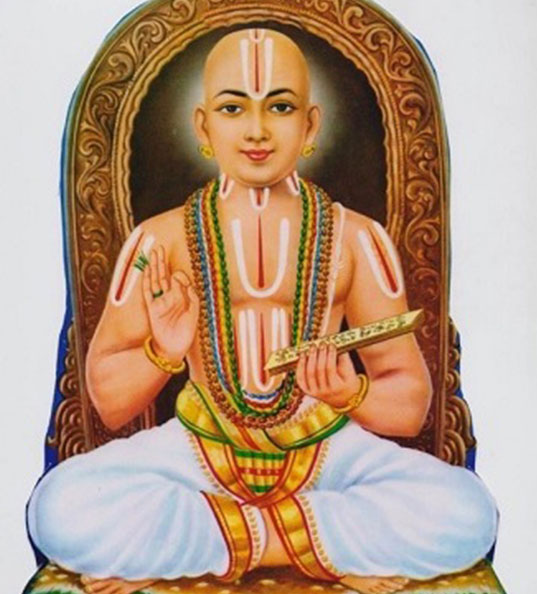
Śrī Vedānta Deśika
An Indian polymath who wrote philosophical, religious and poetical works in Sanskrit, Manipravaḷam, Tamil and Prakrit — one of the most brilliant stalwarts of Sri Vaishnavism in the post-Ramanuja period.
A Hindu devotee, poet, Master of Acharyas (desikan), logician and mathematician — the disciple of Kidambi Appullar, of a master-disciple lineage that began with Ramanuja.
He is considered by the Vadakalai sect of Sri Vaishnavism to be an avatar of the divine bell of Venkateshvara of Tirumala, and belongs to the Vishvamitra / Kaushika gotra.
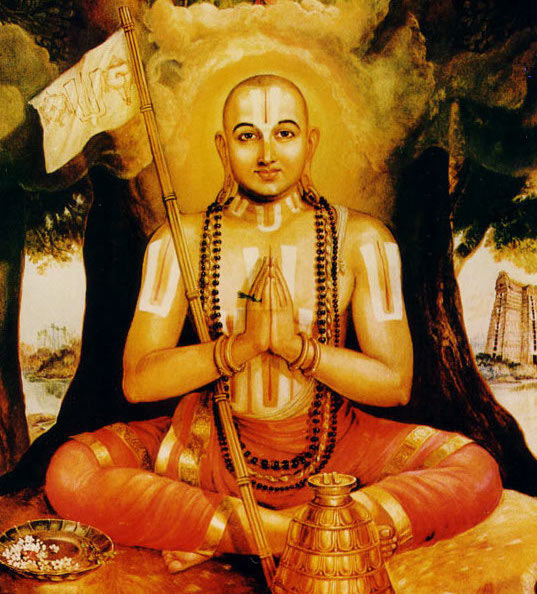
Śrī Rāmānujācārya
A pan-Indian Hindu philosopher, guru and social reformer — one of the most important exponents of the Sri Vaishnavism tradition, whose philosophical foundations for devotionalism were influential to the Bhakti movement.
His guru was Yādava Prakāśa. Sri Vaishnava tradition holds that Ramanuja disagreed with his guru and non-dualistic Advaita Vedānta, and instead followed the Tamil Alvārs and the scholars Nāthamuni and Yamunāchārya.
He is the chief proponent of the Vishishtadvaita sub-school of Vedānta, and wrote influential texts such as bhāsya on the Brahma Sutras and the Bhagavad Gita, all in Sanskrit.
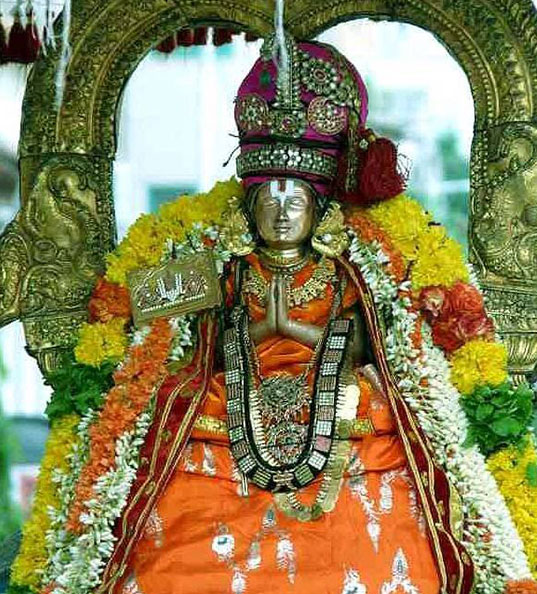
Śrī Yamunācārya
Also known as Alavandar and Yamunaithuraivan, a Vishistadvaita philosopher based in Srirangam, Tamil Nadu — best known as a preceptor of Ramanuja, and the grandson of Nathamuni, the famed yogi who collected the works of the Tamil Alvars.
He grew up learning Vedic texts from Rama Misra and was skilled in mimamsa. According to Sri Vaishnava tradition, as a teenager he challenged Akkiyalvan, the royal priest of a Pandya king, to a debate.
He won the debate through logic; the impressed king and queen adopted him, and the queen hailed the boy as “Alavandar”.
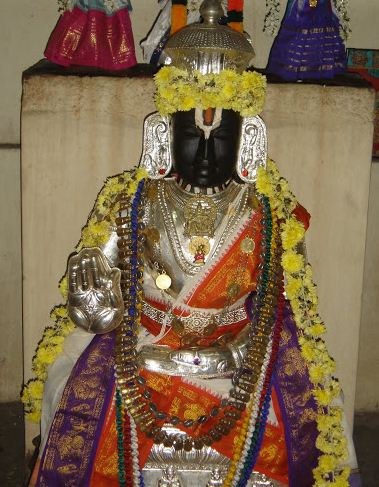
Śrī Nāthamuni
Though his date of birth is difficult to identify, he is considered to have lived during the lineage of Madhurakavi Alvar. According to Sri Vaishnava tradition, he learned of the long-lost Prabandhams of the Alvars from his father, Ishvara Bhattar.
On pilgrimage to the Kumbakonam Sarangapani Temple he heard priests sing ten pasurams of Nammalvar — only 10 of the 1,292 verses were known to them.
Placing immense faith in the deity Aravamudhan, he travelled to Thirukurgur, the birthplace of Nammalvar.
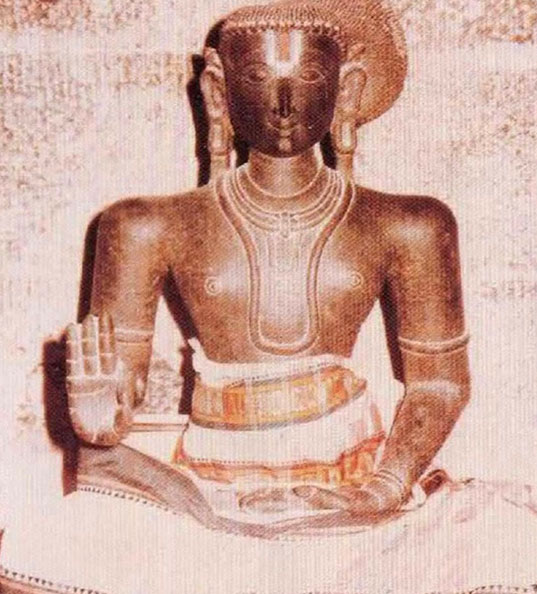
Śrī Nammāḻvār
Known as Vakulabharana, Śathari and Parānkusa, the source of yoga who introduced the essence of the Vedas — one of the twelve Alvar saints of Tamil Nadu, affiliated to the Vaishnava tradition of Hinduism.
The verses of the Alvars are compiled as the Naalayira Divya Prabandham, which sings the praises of 108 temples classified as divine realms, the Divya Desams.
Considered fifth in the line of the twelve Alvars and regarded as the foremost among them, his contributions amount to 1,352 of the 4,000 stanzas in the Naalayira Divya Prabandham.
To teach yoga outside of a sampradāya is to sever it from its spiritual lifeline. To practice yoga within one is to be nourished by its depth, discipline, and grace.
Receive the teaching, don't reinvent it.
If you feel called to study yoga as a living tradition — handed down through generations of realized teachers — we’d love to walk a stretch of the path with you.